HBCU Radio Preservation Project Returns Over 375 Hours of Historic Digitized WFSK Audio to Fisk University
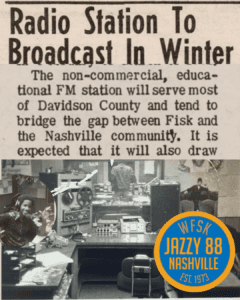 YELLOW SPRINGS, OH, 24 March 2026 — On March 31, 2026 the HBCU Radio Preservation Project will ceremonially return over 397 hours of preserved historic audio that was produced from the broadcast studios of Fisk University’s WFSK 88.1. The preserved materials consist of digitized audio of unique and original programs that aired on WFSK 88.1, including its first broadcast from what was then Radio Free Nashville. Since it began working with Fisk University’s WFSK as one of its five pilot stations in 2022, the HBCU RPP has collected a total of 416 audio artifacts. The HBCU RPP collects a variety of audio formats including reel to reels, CDs, cassettes, digital audio tapes (DATS) and mini-discs. The digitized audio from WFSK preserves the sounds of the station as well as the community that the station has served since their inception. Complemented by seven oral history interviews recorded with individuals with ties to the station, this historic preserved audio is not only a unique part of Fisk’s rich history and legacy; it represents an important part of Tennessee’s diverse and dynamic history. And it further ensures that Black and HBCU radio history will not be erased or lost to the impact of time.
The WFSK return ceremony celebration on March 31, 2026 will be at 10:00 a.m. at the John Hope and Aurelia E. Franklin Library’s Special Collections Reading Room on the campus of Fisk University. After the ceremony, the HBCU RPP will provide training to assist the University with integrating their returned audio into their archival collections. These important materials, which reflect the rich history and legacy of HBCU radio, will be made available to researchers, scholars, teachers, students and content creators for many years to come. An audio montage featuring the sound of WFSK will be presented at the return celebration ceremony.
###
About the HBCU Radio Preservation Project
The HBCU Radio Preservation Project, a collaboration between the WYSO Archivesand the Northeast Document Conservation Center (NEDCC), supports radio stations at Historically Black Colleges and Universities throughout the country in preserving their legacies and cultural heritage while fostering an ethos of preservation.
Nearly one-third of the 101 HBCUs have radio stations, and many have been on the air for more than 50 years. Much of the material these stations have created, primary source material that documents the rich history and diversity of the Black experience, is at risk of being lost because obsolete formats are deteriorating. Even current digital material is at risk without proper preservation methods. The four-year project will serve all 30 HBCU radio stations. Its replicable model will ultimately be of use to any college radio station, tribal stations, rural stations, and other public and community stations.